
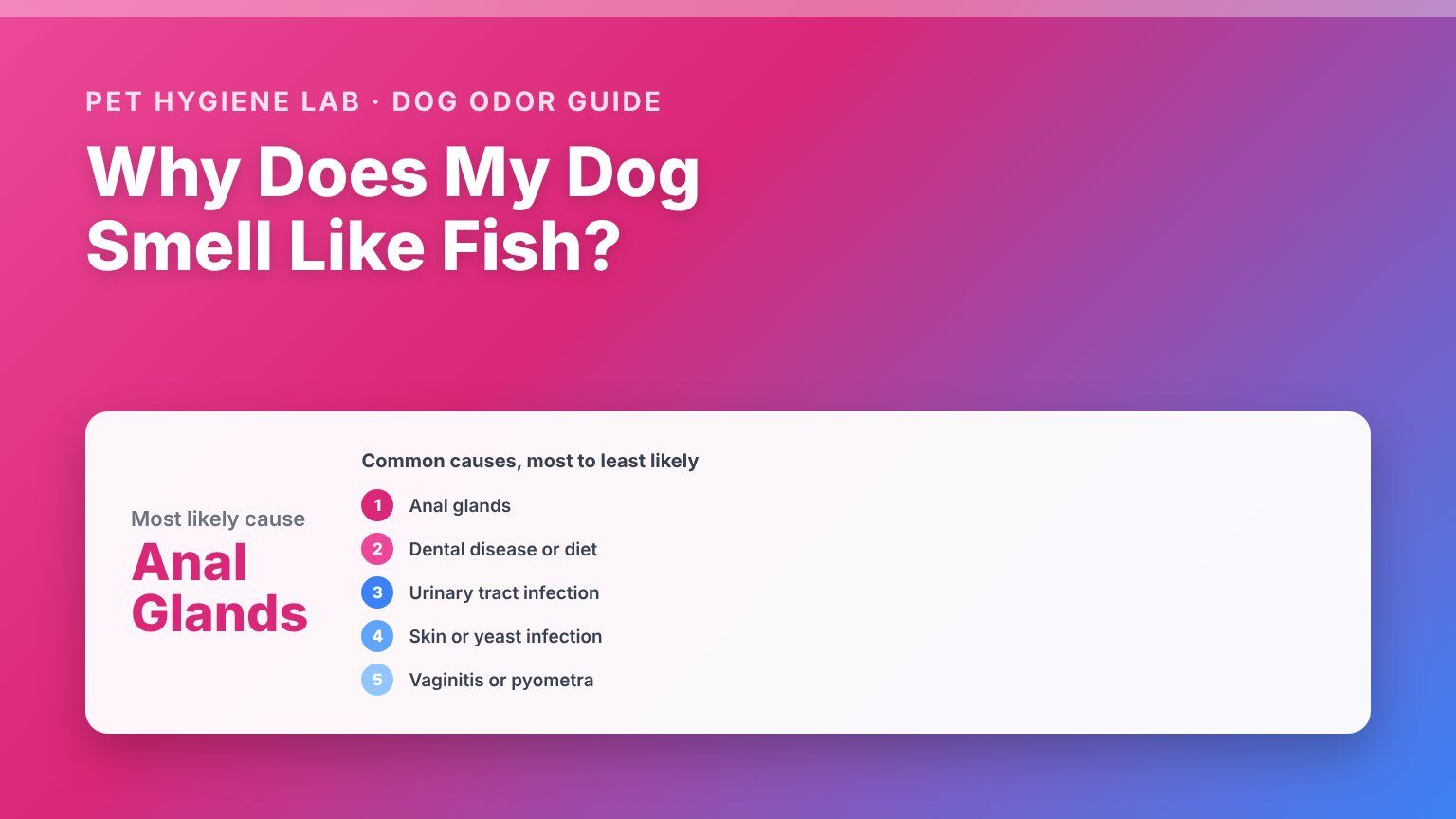
Why Does My Dog Smell Like Fish? Causes & How to Fix It
Quick answer: A fishy smell almost always comes from your dog's anal glands, two small scent sacs next to the anus that can leak or get impacted. Less often, it signals a urinary tract infection, dental disease, or a skin infection. If the smell is strong, sudden, or paired with scooting, licking, or discharge, a vet visit sorts out which one it is.
Why Does My Dog Smell Like Fish?
Dogs pick up all kinds of smells, but a fishy one usually points to something specific rather than general dirtiness. The most common source is a pair of anal glands that sit on either side of your dog's rectum. They normally empty a little with each bowel movement. When they don't, the fluid builds up and gives off that unmistakable tuna-can smell.
That's the most common answer, but not the only one. Where you notice the smell, and what else is going on with your dog, narrows it down fast.
| Where you notice it | Most likely cause | What to check next |
|---|---|---|
| Rear end, comes and goes | Anal glands | Scooting, licking, or a visible swelling near the anus |
| Rear end, female dog, with discharge | Vaginitis or pyometra | Whether she's spayed, and if there's swelling or lethargy |
| Genital area, male dog | Urinary tract infection | Straining to urinate or more frequent trips outside |
| Mouth or breath | Dental disease or diet | Tartar buildup, drooling, or a recent fish-based treat |
| Skin, paws, or ears | Yeast or skin infection | Redness, itching, or a corn-chip-like smell |
The sections below cover each of these in more detail, starting with the most common one.
Anal Gland Problems: The Most Common Cause
Dogs have two small anal glands, positioned roughly at four o'clock and eight o'clock around the anus, according to VCA Animal Hospitals. They produce a scent used for marking and communication, which is why dogs sniff each other there. Normally, passing a firm stool squeezes the glands and empties them without you ever noticing.
Problems start when the fluid doesn't drain. It thickens, the glands swell, and the smell gets stronger and more persistent. Left alone, impacted glands can become infected or form a painful abscess that needs veterinary treatment.
Signs your dog's glands need attention:
- Scooting across the floor or carpet
- Excessive licking or biting at the base of the tail
- Difficulty or straining when sitting
- A visible red or swollen lump near the anus
Some dogs are more prone to this than others. According to the American Kennel Club, small breeds like Cocker Spaniels, Chihuahuas, and Shih Tzus tend to have more anal gland trouble. Large and giant breeds are affected less often.
| Dog type | Anal gland risk | Why |
|---|---|---|
| Small breeds (Cocker Spaniel, Chihuahua, Shih Tzu) | Higher | More prone to clogged or impacted glands |
| Large and giant breeds | Lower | Less commonly affected, though any dog can have issues |
| Overweight dogs | Higher | Extra weight and weaker muscle tone make expression harder |
| Dogs with soft or loose stools | Higher | Soft stool doesn't apply enough pressure to empty the glands |
For dogs with recurring impactions, a vet can set up a routine. Some need their glands expressed every four to six weeks to stay comfortable, per the AKC's veterinary sources.
Why Does My Dog Smell Like Fish Sometimes, Not All the Time?
If the smell shows up now and then rather than constantly, anal glands are still the likely cause, just an intermittent version of it. A few things trigger a sudden release:
- Fear or excitement. When a dog is startled or stressed, the anal glands can empty on their own as part of a fight-or-flight response. You might notice the smell after a vet visit, a thunderstorm, or a scary encounter with another dog.
- A looser stool than usual. A change in food, a treat that didn't agree with them, or mild stomach upset can change how firm the stool is. That changes how well it expresses the glands.
- After getting wet. Water can temporarily mask or release built-up gland secretions, so the smell seems to appear out of nowhere after a bath or a swim.
None of these are cause for alarm on their own. It's a pattern worth watching if the smell becomes more frequent, stronger, or starts showing up alongside scooting or licking.
Why Does My Female Dog Smell Like Fish?
In female dogs, a fishy smell from the genital area can mean something beyond anal glands. Two conditions to know about:
Vaginitis. An infection or inflammation of the vagina, usually caused by bacteria or a yeast imbalance. It often comes with discharge, itching, and licking at the area. Vaginitis can affect dogs of any age, spayed or not, and is generally treatable with a vet visit.
Pyometra. A uterine infection that only affects unspayed females. It starts when a dog goes into heat and the cervix opens, letting bacteria into the uterus. Pyometra is more serious than vaginitis and is considered a medical emergency. Watch for lethargy, loss of appetite, increased thirst, or a swollen abdomen alongside the odor, and call your vet right away if you see them.
A urinary tract infection can also produce a fishy smell in female dogs, usually with more frequent urination or visible discomfort when peeing.
If your female dog's odor doesn't match the anal gland signs described earlier in this guide. Especially if she's unspayed, it's worth ruling out vaginitis or pyometra with a vet rather than waiting it out.
Why Does My Male Dog Smell Like Fish?
Male dogs aren't prone to vaginitis or pyometra, but a fishy odor from the genital area can still point to a urinary tract infection. Bacteria in the bladder or urinary tract can give urine an off, fishy smell, and in males it's often paired with:
- Straining to urinate, or only passing a small amount
- More frequent trips outside
- Licking at the genital area more than usual
- Blood tinting the urine
UTIs are uncomfortable but straightforward to treat with a course of antibiotics once a vet confirms the diagnosis, typically with a urine test. If the smell is coming from behind rather than from urinating, anal glands are still the more likely explanation. Check the signs in the section above first.
Fishy Dog Breath: Dental Disease and Diet
If the fishy smell is coming from your dog's mouth, two things are usually behind it: what they've been eating, or their dental health.
Diet. Fish-based kibble, treats, or fish oil supplements can leave a lingering fishy smell on the breath. This is harmless and goes away once the food works its way through their system.
Dental disease. Bacteria buildup from tartar and gum disease produces its own unpleasant, sometimes fishy odor. This is extremely common: according to VCA Animal Hospitals, over 80% of dogs over the age of three have some form of periodontal disease. PetMD notes that certain breeds are more prone to it because of their genetics or jaw shape. That includes Yorkshire Terriers, Chihuahuas, Dachshunds, and Labrador Retrievers, plus flat-faced breeds like Pugs, Boxers, and Shih Tzus.
Other signs of dental disease to look for:
- Visible tartar or yellow-brown buildup on the teeth
- Drooling more than usual
- Dropping food while eating
- Pawing at the face or mouth
VCA recommends brushing at least three times a week to slow tartar buildup. Daily is better if your dog will tolerate it. If you see tartar or other signs above along with the smell, it's worth a dental checkup rather than relying on brushing alone.
Skin and Yeast Infections
Skin and yeast infections are the least common of the main causes. Still, they're worth checking if the smell comes from your dog's skin, paws, or ears rather than their rear end or mouth. Yeast overgrowth tends to show up in warm, moist spots like skin folds, ear canals, and between the toes. The resulting smell is often described as fishy or like corn chips.
Signs to watch for alongside the smell:
- Redness or discoloration of the skin
- Excessive licking or chewing at paws or skin folds
- Scabs, sores, or hair loss
- Greasy or flaky patches
Yeast infections are usually tied to an underlying cause, like allergies or excess moisture. A vet visit helps treat both the infection and whatever's triggering it. Antifungal shampoos or wipes can help, but they work best alongside the right diagnosis rather than as a standalone fix.
How to Get Rid of the Fishy Smell at Home
What helps depends on the cause, but a few safe, general steps work for most mild cases:
- Check the source first. Sniff your dog's rear end, mouth, and skin separately. You can't fix what you haven't located.
- For mild anal gland buildup, a bath with a dog-safe shampoo, plus a fiber-rich diet like pumpkin or green beans, can help the glands express naturally. For general odor control between baths, our guide to removing dog smell naturally covers safe options.
- For fishy breath from diet, switch away from fish-based treats for a few days and see if the smell clears up.
- For fishy breath from early dental buildup, start brushing a few times a week with dog-safe toothpaste and offer dental chews.
- For skin odor, a medicated, antifungal shampoo can help, but check with a vet first if there's redness or hair loss.
What home care won't fix: impacted or infected anal glands that need manual expression, vaginitis or pyometra, a UTI, or an abscess. Those need a vet, not a home remedy, however good the remedy is.
When to See a Vet
A fishy smell on its own usually isn't an emergency. Paired with certain symptoms, it can be. Call your vet right away if you notice:
- A painful, swollen lump near the anus
- Bleeding or oozing from the rear end
- Fever, lethargy, or loss of appetite
- Excessive, disruptive scooting
- Pain or difficulty sitting
- In unspayed females: lethargy, a swollen abdomen, or vaginal discharge
Important: Mild symptoms, like occasional scooting with no pain or swelling, are usually safe to monitor and book a routine appointment for. According to veterinarians cited by the AKC, these can worsen within 24 to 48 hours, progressing from mild discomfort to a more serious infection if left untreated. When in doubt, a same-day call to your vet is the safer move.
For anything involving pyometra symptoms, don't wait for an appointment opening. That one is treated as an emergency.
For the full picture, start with our guide to dog body odor. Related reading: Dog Smells Like Iron and Dog Smells Oily.
Frequently Asked Questions
Bottom Line
A fishy smell is annoying, but it's rarely a mystery once you know where to look. Anal glands explain most cases, and dental or diet issues explain most of the rest. The exceptions, like UTIs, vaginitis, pyometra, and skin infections, all come with their own extra signs to watch for. When those extra signs show up, a vet visit beats guessing.
This article is part of our full dog odor guide covering every common cause of smell in dogs.