
Old Dog Bad Breath: Causes, Red Flags, and What Helps
Quick answer: Bad breath that shows up or gets worse in an older dog usually signals a new problem, not just age. The most common causes are advancing periodontal disease, kidney disease, dry mouth from medications, and a drop in self-grooming. A vet exam can pin down the cause and rule out anything serious.
Why Does My Old Dog's Breath Suddenly Smell Worse?
Bad breath that develops late in a dog's life is rarely just "getting old." It usually means something in the mouth or body has changed. A fresh case of puppy breath fades on its own as adult teeth come in. Breath that turns foul in a senior dog needs a different explanation. The mouth, kidneys, liver, and saliva glands all shift with age. The good news is most causes are treatable once you know what changed.
What Causes Bad Breath in Older Dogs?
Four changes drive most cases of new or worsening breath odor in senior dogs. Periodontal disease often reaches an advanced stage by this age. Kidney function can decline enough to change how breath smells. Some medications dry out the mouth, which lets odor-causing bacteria build up. Many older dogs also groom themselves less, so saliva does less work cleaning the teeth and coat. The sections below walk through each cause and what it tends to look like.
Periodontal Disease Gets Worse With Age
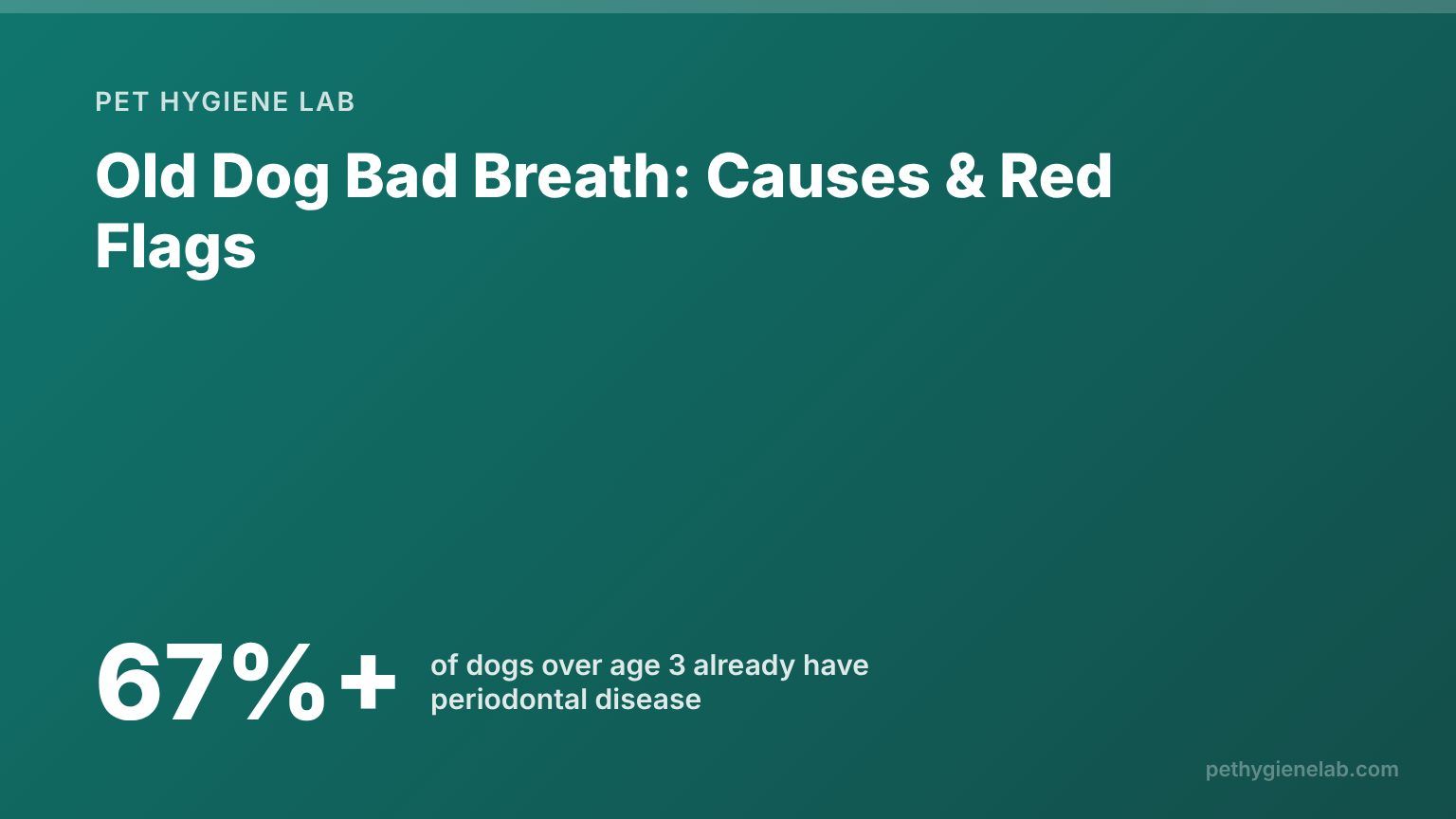
Periodontal disease is the single biggest driver of bad breath in older dogs. More than two-thirds of dogs over age three already have some degree of it. The damage adds up each year it goes untreated. Plaque hardens into tartar, tartar traps more bacteria, and the infection works its way under the gumline. Veterinary dental disease staging runs from mild gum inflammation up through bone loss and loose teeth. By the time a dog is a senior, years of plaque buildup have often taken their toll. The infection may have reached a point where the smell is hard to miss. You can read more about how the stages of dental disease connect to specific odors.
Kidney Disease and Ammonia-Like Breath
Chronic kidney disease is common in aging dogs and can change how their breath smells. Small breeds often show early signs around 10 to 14 years old. Large breeds can develop problems as early as age seven, according to VCA Animal Hospitals. As the kidneys lose the ability to filter waste, it builds up in the blood. This can give breath an ammonia-like or urine-like smell. This usually shows up alongside other signs, like drinking more water, urinating more, or eating less. Noticeable symptoms often don't appear until a large share of kidney function is already gone. Breath odor paired with increased thirst is worth a same-week vet visit, not a wait-and-see approach.
Dry Mouth From Medications
Saliva does more than keep a dog's mouth comfortable. It washes away food debris and carries natural compounds that help control odor-causing bacteria. Some common drugs reduce how much saliva a dog produces, a condition vets call xerostomia, according to the Merck Veterinary Manual. Senior dogs are more likely to take daily medications for arthritis, heart disease, or other chronic conditions. That raises the odds of this side effect. Dehydration and fever can add to the problem. A drier mouth gives bacteria more room to multiply, which makes breath smell worse even if plaque levels haven't changed much.
Reduced Self-Grooming in Senior Dogs
Older dogs often groom themselves less than they used to. Arthritis can make it uncomfortable to twist and reach, and stiff joints slow a dog down. Some senior dogs simply have less energy for routine self-care. Less grooming means less natural saliva spread across the coat and mouth area. Food particles or drool can sit longer around the lips and chin. On their own, these changes are mild. Combined with early dental disease, though, they can make breath smell noticeably worse than it did a year or two earlier.
Normal Aging or Something Serious? How to Tell the Difference
Not every change in an older dog's breath is a medical emergency, but some patterns deserve a prompt vet visit. The table below compares what tends to come with ordinary aging against signs that point to a bigger problem.
- Breath smell: Mild, musty odor that stays steady — Sudden change, or a strong ammonia, sweet, or rotten smell
- Appetite: Slightly slower eater, same overall interest in food — Skipping meals or sudden weight loss
- Thirst and urination: Minor changes — Drinking or urinating noticeably more than before
- Gums: Slightly pale pink, no bleeding — Red, bleeding, swollen, or very pale gums
- Energy: Naturally slower, still engaged — Sudden lethargy or confusion
- Teeth: Some visible tartar — Loose teeth, visible pus, or a swollen face
Table: Signs of normal canine aging versus red flags that warrant a prompt vet visit.
If your dog only shows the left-hand signs, routine dental care and a wellness check are a reasonable next step. Any item from the right-hand column is a reason to call your vet soon.
How Vets Diagnose the Cause of Old Dog Bad Breath
A vet starts with a hands-on oral exam while your dog is awake, checking for visible tartar, loose teeth, redness, or growths. Blood work usually comes next, since it can flag kidney or liver problems before they show other symptoms. If dental disease looks likely, your vet will probably recommend a full exam and cleaning under anesthesia. That typically includes dental X-rays to see below the gumline. According to the AKC, breath that smells sweet or fruity can point to diabetes. Urine-like breath often signals kidney trouble. Your vet may run specific tests based on what the odor suggests.
What to Do About Old Dog Bad Breath
Start with a vet visit rather than guessing at home, since the right fix depends on the cause. If dental disease is the culprit, a professional cleaning is the first step. Daily brushing with a dog-safe toothpaste is the most effective long-term plan. If blood work points to kidney or liver changes, your vet will set up a treatment and monitoring plan. Breath odor often improves once the underlying issue is managed. For dry mouth linked to medication, ask your vet whether a dose adjustment or a saliva-supporting product makes sense. Daily or near-daily brushing, dental chews with proven effectiveness, and regular checkups all help regardless of the root cause.
For the full picture, start with our guide to dog bad breath. Related reading: Dog Bad Breath After Eating and Dog Dental Checkups.
What Makes a Senior Dog's Bad Breath Different From a Younger Dog's?
Older dogs carry more years of plaque buildup. It's more likely to have become advanced periodontal disease by now. They also develop kidney disease, diabetes, and oral tumors more often than younger dogs do.
A young dog's bad breath is usually diet-related or mild gingivitis. A senior dog's bad breath often signals a problem that's built for years, or a new organ issue. That's why vets take new or worsening bad breath in an older dog seriously.
Even a dog that seems otherwise fine can have a condition worth catching early. If your dog's breath smells specifically fishy or like feces, those point to their own causes. See our guides on fishy dog breath and breath that smells like poop for those specific smells.
Frequently Asked Questions
Is bad breath normal in old dogs? A faint odor can be normal, but breath that's suddenly strong, sour, or ammonia-like usually isn't. Treat a noticeable change as a signal to schedule a vet visit rather than something to just live with.
Why does my senior dog's breath suddenly smell like fish? A fishy smell in an older dog's breath can point to several sources, including dental infection or diet. Our guide to dog breath that smells like fish walks through the most likely causes and what to check first.
Why does my old dog's breath smell like poop? This can happen if a dog eats stool, a habit that sometimes increases with age-related confusion. It can also point to a significant dental or digestive problem. See our full breakdown of breath that smells like poop for the likely causes.
Can kidney disease cause bad breath in dogs before other symptoms show up? Yes, bad breath is sometimes one of the earlier signs owners notice. By the time symptoms appear, though, a large share of kidney function is often already affected. Any new breath change in a senior dog is a reasonable reason to request bloodwork.
Will a dental cleaning fix my old dog's bad breath? Often, yes, if dental disease is the main cause. A professional cleaning removes the tartar and bacteria below the gumline that brushing alone can't reach. Most dogs have noticeably fresher breath afterward.
Is anesthesia safe for a senior dog's dental cleaning? Modern anesthesia protocols account for a senior dog's age and health status, and pre-anesthetic blood work helps catch risks beforehand. Talk with your vet about your dog's health history so they can tailor the plan.
Can changing my old dog's food help with bad breath? A high-quality diet supports overall health, but food alone rarely fixes bad breath caused by dental disease or an organ issue. Brushing and a vet-confirmed diagnosis matter more than any single food switch.
Bottom Line
Bad breath that shows up or worsens in an older dog is your cue to look deeper. Don't just reach for a breath spray. Periodontal disease, kidney changes, dry mouth, and reduced grooming are the usual suspects. All of them respond better the earlier you catch them. For daily habits that help between vet visits, see our guide on how to fix dog bad breath at home.