
Why Does My Dog Smell Sour? Causes, Fixes, and Prevention
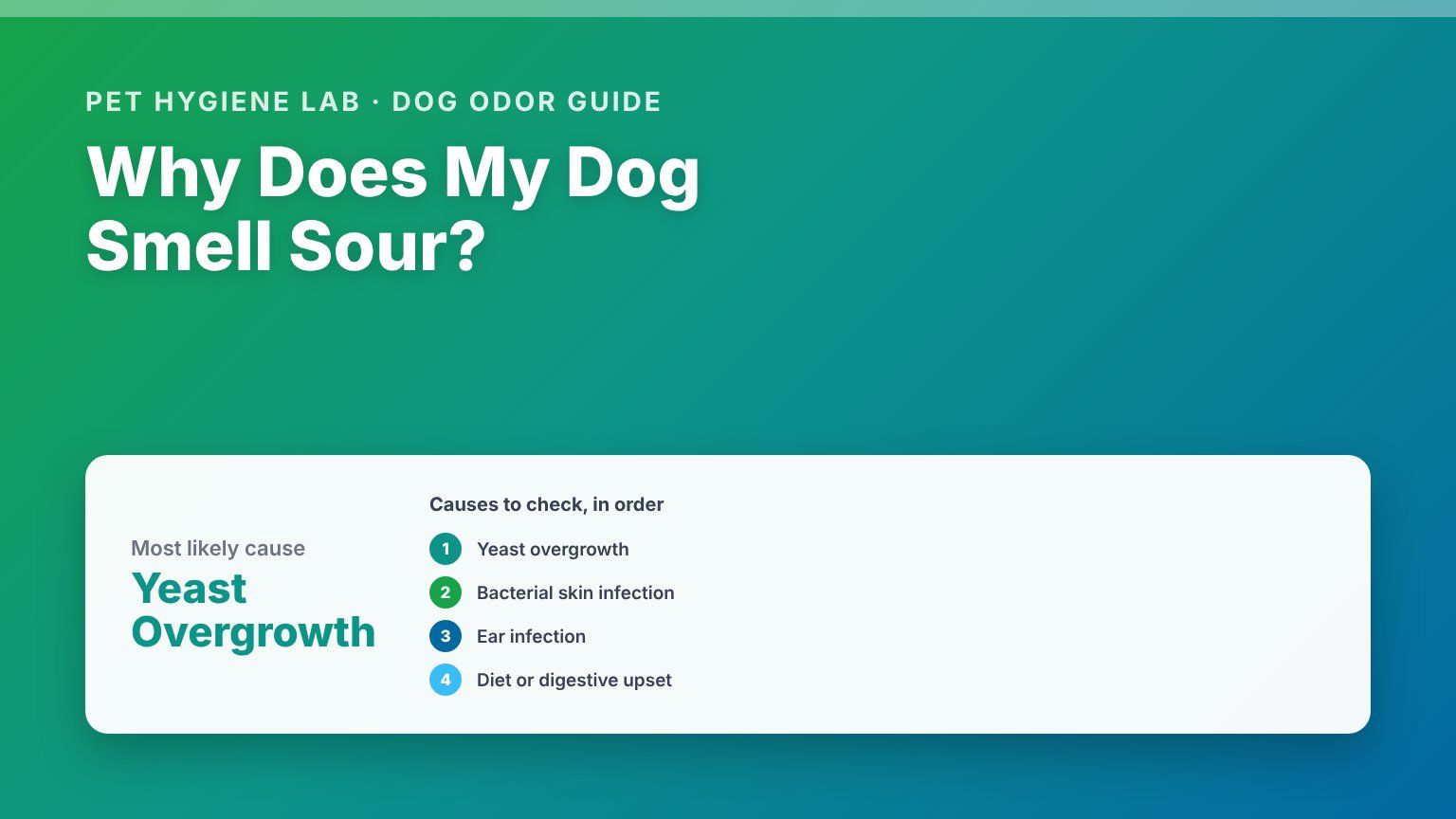
Quick answer: A sour or musty smell on a dog almost always comes from yeast overgrowth or a bacterial skin infection. Diet and poor hygiene rarely cause it alone. Figure out which one it is, treat the cause, then keep it from coming back with a simple routine.
Why Does My Dog Smell Sour?
Most dogs have a faint, familiar smell that is not unpleasant. A sour or musty smell that you notice from across the room is different. It usually means yeast or bacteria have overgrown somewhere on the skin, ears, or paws.
Both yeast and bacteria live on a healthy dog's skin in small numbers. Warm, moist conditions let them multiply past normal levels, and that overgrowth is what produces the smell. Skin folds, floppy ears, wet fur, and allergies all create the kind of moisture they need.
Diet and poor hygiene get blamed first, but they rarely cause a sour smell on their own. A high-fat diet or an unwashed coat can make an existing problem worse. The root cause is almost always yeast, bacteria, or an infection somewhere specific. We cover every type of dog odor, not just sour smells, in our full guide to why dogs smell bad.
Figure Out Which Cause It Is
The exact smell and where it shows up both point toward the cause.
| Smell pattern | Likely cause | What to check next |
|---|---|---|
| Musty or corn-chip smell, greasy skin or paws | Yeast overgrowth | Redness, darker skin, or constant licking of one spot |
| Musty smell between the toes or in skin folds | Bacterial skin infection | Small red bumps, crusty patches, or hair loss |
| Sour, yeasty smell from the ears specifically | Ear infection | Head shaking, scratching, or dark discharge |
| Smell that gets stronger right after your dog gets wet | Trapped moisture feeding yeast or bacteria | See our guide to wet dog smell |
| Sour smell paired with gas or loose stools | Diet or digestive upset | A recent food change or something scavenged outside |
| Ammonia-like smell, especially around the rear | Urine-soaked fur or a urinary issue | Straining to urinate or more frequent trips outside |
If the smell is strongest right after your dog gets wet, see our guide to wet dog smell for more on trapped moisture.
Treating Each Cause
Yeast Overgrowth
Yeast overgrowth, often called yeast dermatitis, is the single most common cause of a sour or musty dog smell. It shows up as greasy, flaky, or thickened skin, often on the paws, ears, or in skin folds. VCA Animal Hospitals lists these as its clinical signs. Allergies and a weakened immune system both make it more likely.
A vet will usually prescribe a medicated shampoo with chlorhexidine, miconazole, or ketoconazole, left on the skin for at least 10 minutes. Severe or recurring cases may need an oral antifungal for several weeks. Yeast tends to come back if an underlying allergy goes untreated.
Bacterial Skin Infection
Bacterial skin infections, known as pyoderma, cause a musty odor too, most often between the toes or in skin folds. Look for small red bumps with a pus-filled center, crusty patches, or hair loss, per VCA Animal Hospitals. It is often secondary to allergies or constant scratching.
Treatment usually means oral antibiotics for three to four weeks, sometimes longer for chronic cases, plus a medicated shampoo. Don't stop antibiotics early even if the smell clears, since the infection can return worse.
Ear Infections
A sour or yeasty smell that comes specifically from the ears, not the whole body, usually means an ear infection. Dogs with floppy ears or those who swim often are more prone to it. Head shaking, scratching at the ears, and dark discharge are the clearest signs.
Your vet can confirm it with a swab and prescribe the right cleaner or antifungal ear drops. Don't use a human ear-cleaning product, since some ingredients are unsafe for a dog's ear canal.
Diet and Digestive Causes
A sour smell tied to gas, burping, or loose stools usually points to the gut rather than the skin. A recent food switch, table scraps, or something scavenged on a walk are common triggers. This usually clears up within a day or two of returning to a normal diet.
If the sour smell and loose stools last more than two days, call your vet. The same goes if your dog seems lethargic.
Daily Routine to Prevent a Sour Smell
Once the underlying cause is treated, a short daily routine keeps yeast and bacteria from building back up.
- Dry your dog fully after baths or swimming. Trapped moisture in the coat, paws, and skin folds is what lets yeast and bacteria multiply in the first place.
- Check and wipe skin folds and ear flaps. Breeds with folds or floppy ears need a quick daily wipe-down to keep the area dry.
- Bathe with a mild or medicated shampoo on a regular schedule. Over-bathing strips natural oils and can make skin problems worse, so stick to what your vet recommends.
- Keep your dog at a healthy weight. Extra skin folds from excess weight trap more moisture and raise the risk of both yeast and bacterial infections.
- Manage allergies if your dog has them. Allergic skin disease is one of the biggest drivers of recurring yeast and bacterial overgrowth. For broader odor control between these steps, see our guide to getting rid of dog smell.
When a Sour Smell Means Something More Serious
Most sour smells clear up with the right treatment and a bit of patience. Call your vet sooner if you notice any of these:
- Open sores, pus, or a hot, swollen patch of skin
- A smell that keeps getting worse despite treatment and cleaning
- Thickened, darkened, or elephant-like skin
- Severe itching that leads to raw or bleeding skin
- Lethargy, loss of appetite, or a fever alongside the smell
None of these resolve on their own, and waiting usually means a longer, more expensive treatment later.
For the full picture, start with our guide to dog body odor. Related reading: Dog Smells Like Iron and Dog Smells Oily.
Frequently Asked Questions
Bottom Line
A sour or musty dog smell is almost always yeast or a bacterial skin infection, not diet or dirt. Use the table above to narrow down the cause, then treat it with the right shampoo or medication. Keep up a drying and grooming routine to stop it coming back. For every other type of dog odor, see our full guide to why dogs smell bad.